Table of Contents
ToggleLiving in Dana Point brings ocean breezes, stunning views, and year-round mild weather, but also a steady stream of uninvited guests with six (or more) legs. Coastal properties face unique pest pressures that inland homes simply don’t encounter. Salt air, consistent humidity, and tight-knit housing developments create ideal conditions for rodents, ants, and termites to thrive. This guide walks homeowners through the most common pests in Dana Point, proven DIY prevention tactics, and when it’s time to bring in professional help to protect your investment.
Key Takeaways
- Dana Point pest control requires addressing coastal-specific threats like roof rats, Argentine ants, and termites that thrive year-round in mild humidity and marine air conditions.
- Seal foundation cracks, trim vegetation 3 feet from rooflines, install door sweeps, and fix moisture sources like leaky faucets—these DIY prevention tactics stop most pest problems before they start.
- Termite infestations, large rodent populations, and established ant supercolonies demand professional treatment; fumigation typically costs $1,200–$2,500 and should be preceded by at least three quotes.
- Modern Dana Point pest control operators now offer integrated pest management (IPM) and eco-friendly options like borate treatments and exclusion systems that protect coastal waterways and non-target wildlife.
- Most mortgage lenders require a Section 1 Wood Destroying Pest Inspection ($75–$150) when buying or selling; only licensed structural pest control operators can issue these reports.
- Crawl space encapsulation ($3,000–$8,000) and upgraded attic ventilation significantly reduce moisture that attracts termites, carpenter ants, and other coastal pests.
Common Pests in Dana Point and Why Coastal Living Attracts Them
Dana Point’s coastal microclimate isn’t just attractive to homeowners, it’s paradise for pests. The combination of moisture-rich air, consistent temperatures (rarely below 50°F or above 80°F), and landscaping that stays green year-round means bugs and rodents never experience the natural die-off that winter brings to colder regions.
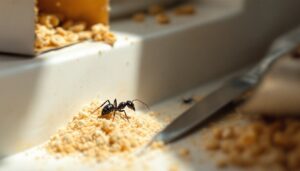
Ants thrive in the humidity, building massive underground colonies that can stretch beneath multiple properties. Argentine ants, in particular, form supercolonies that span entire neighborhoods, making them nearly impossible to eliminate with spot treatments alone. Moisture from morning fog and evening marine layer creates perfect conditions for these colonies to expand.
Rodents, primarily roof rats and house mice, move inland from the harbor area seeking food and shelter. Older homes with wooden siding, attic vents without ¼-inch hardware cloth, and trees touching rooflines provide easy access. Rats can squeeze through openings as small as ½ inch, roughly the diameter of a quarter.
Termites are the silent wealth-destroyer in coastal California. Subterranean termites build mud tubes up foundation walls, while drywood termites infest attic framing and can go undetected for years. Orange County’s mild winters mean termite activity continues year-round, unlike regions with hard freezes that slow reproduction.
Rodents, Ants, and Termites: The Top Three Threats
Roof rats are Dana Point’s most common rodent problem. They’re agile climbers that nest in attics, palm trees, and dense ivy. Signs include droppings roughly ½ inch long, greasy rub marks along rafters, and scratching sounds at night. A single female can produce up to 40 offspring per year, so an initial pair becomes an infestation rapidly.
Argentine ants and odorous house ants dominate the local ant scene. Both species are drawn to moisture and sweets, trailing into homes through foundation cracks, plumbing penetrations, and door thresholds. Unlike carpenter ants (which do structural damage), these species are nuisance pests, but their sheer numbers can make kitchens and bathrooms unusable.
Drywood termites leave piles of tiny pellets (frass) that resemble coarse sand or sawdust, often found below infested wood. Subterranean termites build mud tubes, pencil-width tunnels made of soil and saliva, along foundation walls or pier blocks. Both require professional treatment, but early detection can save tens of thousands in repair costs. Many homeowners seeking professional solutions turn to one-time treatments when infestations are caught early. According to Hart’s Extermination Company Reviews, local pest control providers in Dana Point average 27 years of experience dealing with these coastal-specific challenges.
DIY Pest Prevention Strategies for Dana Point Homeowners
Prevention beats treatment every time, and it’s cheaper. Most pest problems start with easily fixable entry points and moisture issues that homeowners can address with basic tools and a Saturday afternoon.
Start with a perimeter walk. Inspect your foundation for cracks wider than ⅛ inch and seal them with polyurethane or silicone caulk. Check where utilities enter the home, cable lines, gas pipes, irrigation controls, and fill gaps with copper mesh (steel wool rusts in coastal air) followed by expanding foam.
Trim all tree branches and shrubs back at least 3 feet from the roofline. Rats and ants use overhanging vegetation as highways directly into attics and second-story windows. Pay special attention to palms and climbing vines: both are rodent favorites.
Install door sweeps on all exterior doors, including garage doors. A ½-inch gap under a door is an open invitation. Look for aluminum or rubber sweeps rated for exterior use, plastic cracks in UV exposure within a year.
Fix leaky faucets, dripping hose bibs, and clogged gutters immediately. Moisture is the number-one attractant for pests in coastal zones. A slow drip under a kitchen sink can support an ant colony of 100,000 individuals. Check under sinks monthly for signs of moisture or musty odors.
Store firewood and lumber at least 20 feet from the house and 6 inches off the ground on concrete blocks or metal racks. Termites colonize woodpiles and migrate to nearby structures.
Sealing Entry Points and Managing Moisture in Humid Climates
Coastal homes face moisture challenges that desert or inland properties don’t. Morning fog, evening marine layer, and proximity to saltwater mean relative humidity rarely drops below 60%, even in summer.
Install or upgrade attic ventilation. Code requires 1 square foot of ventilation per 150 square feet of attic space (IRC R806.2), but many older Dana Point homes fall short. Add soffit vents and ridge vents to improve airflow and reduce moisture buildup that attracts termites and carpenter ants.
Check crawl spaces for standing water or damp soil. Install 6-mil polyethylene vapor barrier over exposed dirt and ensure crawl space vents are open and unobstructed. In severe cases, consider a crawl space encapsulation system, professional installation runs $3,000–$8,000 depending on square footage and local market rates.
Inspect window and door frames for rotted wood, especially on the weather side of the house. Drywood termites and carpenter ants target softened wood. Replace damaged sections with pressure-treated lumber or composite trim that resists moisture and insects. Homeowners in nearby Ventura face similar challenges with coastal moisture and pest pressure.
Use dehumidifiers in basements, laundry rooms, and bathrooms without exhaust fans. Keep indoor humidity below 50% to discourage ants, silverfish, and fungus-eating insects. Empty and clean the reservoir weekly to prevent mold growth.
Seal around plumbing penetrations under sinks and behind toilets with waterproof caulk. Ants and cockroaches often enter through gaps around drain pipes. This is also where you’ll find the first signs of leaks, damp drywall or discolored flooring.
Clean gutters twice yearly (fall and spring) and extend downspouts at least 6 feet from the foundation. Clogged gutters overflow onto fascia boards, creating water damage that attracts carpenter ants and termites.
When to Call Professional Pest Control Services
Some pest problems are beyond DIY. Termites, large rodent infestations, and established ant supercolonies require professional equipment, pesticides, and expertise that most homeowners don’t have access to.
Call a licensed pest control operator if you find active termite mud tubes or frass, even a small amount. Termite treatments involve trenching and chemical barriers, bait station systems, or fumigation (tenting) for drywood species. Fumigation costs $1,200–$2,500 for an average Dana Point single-family home, but varies with square footage and infestation severity. Always get at least three quotes. For regional insights, consider checking pest control approaches in Gilbert, AZ, where similar warm-weather pest challenges exist.
Rodent infestations that persist after two weeks of DIY trapping indicate a larger population or hidden entry points you’ve missed. Pros use infrared cameras to detect nest sites in walls and attics, and install exclusion systems that prevent re-entry. They also safely remove contaminated insulation and sanitize affected areas, critical for preventing hantavirus and histoplasmosis from rodent droppings.
Ant problems that return within days of treatment suggest a supercolony spanning multiple properties. Professional services use non-repellent liquid insecticides and bait matrices that workers carry back to the queen, eliminating the colony at its source. Repellent sprays from hardware stores often make the problem worse by causing colonies to split (a survival behavior called budding).
If you’re buying or selling a home, most lenders require a Section 1 pest inspection report (officially called a Wood Destroying Pest Inspection in California). Only licensed structural pest control operators can issue these reports, which identify active infestations and conditions conducive to pests. Expect to pay $75–$150 for the inspection. Platforms like HomeAdvisor can help connect homeowners with licensed inspectors and provide cost estimates for treatment.
Eco-Friendly and Safe Treatment Options for Coastal Properties
Coastal homeowners are often concerned about pesticide runoff into storm drains and the ocean. Many Dana Point pest control companies now offer integrated pest management (IPM) programs that minimize chemical use.
IPM starts with sanitation, exclusion, and habitat modification, addressing the root causes rather than just spraying. When pesticides are necessary, pros use targeted applications in cracks, crevices, and voids rather than broadcast sprays.
Borate-based termite treatments are less toxic than traditional liquid termiticides and provide long-lasting protection when applied to wood framing during construction or renovation. Borates are essentially a mineral salt that termites can’t metabolize.
Rodent control has shifted away from anticoagulant poisons (brodifacoum, bromadiolone) that can poison hawks, owls, and pets that eat poisoned rodents. Modern approaches favor snap traps, electronic traps, and exclusion. Some companies use CO₂ systems that euthanize rodents in burrows, effective for ground squirrels and gophers without secondary poisoning risk.
Ant baits now use active ingredients like indoxacarb and fipronil in tiny, enclosed bait stations that keep the product away from kids and pets. Workers carry the bait back to the colony, eliminating the queen and brood. For homeowners dealing with recurrent infestations, exploring Bloomington pest control methods may offer additional regional strategies.
Look for pest control operators certified by GreenPro (a certification from the National Pest Management Association) or EcoWise Certified. Both programs require training in reduced-risk products and IPM methods. Ask specifically about their approach to protecting local waterways and non-target wildlife.
Conclusion
Dana Point’s coastal environment demands a proactive approach to pest management. Regular inspections, moisture control, and strategic exclusion work keep most problems at bay. But when termites, rodents, or supercolonies of ants move in, don’t wait, early professional intervention saves money and protects your home’s structural integrity. Stay ahead of the pests, and enjoy everything coastal living has to offer.